
Jean-Francois Hocquette
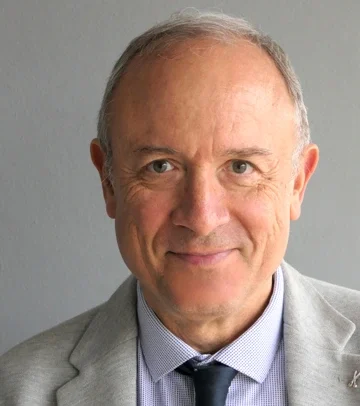
Director of Exceptional Class Research in INRAE
Jean-François Hocquette: Advancing Scientific Excellence In Sustainable Beef Research
Scientific leadership often develops quietly through years of dedication, curiosity, and collaboration. For Jean-François Hocquette, Director of Exceptional Class Research at INRAE, the French National Research Institute for Agriculture, Food and the Environment, the journey has been guided by a deep commitment to understanding food systems and improving the quality and sustainability of beef production. Over decades of research, he has helped shape global conversations around livestock farming, consumer expectations, and the future of food.
Hocquette’s work sits at the intersection of science, agriculture, and society. His research focuses on the production of high-quality beef while addressing important issues such as environmental impact, animal welfare, and economic sustainability for farmers. These topics are often debated across scientific, political, and public platforms. Instead of treating them as competing interests, he approaches them as interconnected challenges that require balanced and evidence-based solutions.
Throughout his career, Hocquette has emphasized the importance of collective scientific effort. He believes that progress happens when researchers from different fields share knowledge and challenge ideas through open discussion. “Scientific research must be collective, shared, transparent, and independent in order to generate objective and useful knowledge for human societies,” he explains.
This principle has guided both his leadership style and his scientific contributions. Through international collaborations, partnerships with industry professionals, and long-term research initiatives, he has helped build frameworks that connect scientific discovery with real-world impact.
In addition to his research leadership, Hocquette is also a member of the Academy of Agriculture of France. Founded in 1761, this learned society brings together leading experts such as scientists, agronomists, veterinarians, and economists to reflect on major questions related to agriculture, food, and the environment. The academy plays an important role in public debate by producing analyses, expert opinions, and conferences that inform agricultural policy and decision-making.
Leadership Guided By Scientific Integrity
Jean-François Hocquette’s leadership philosophy is rooted in collaboration and intellectual openness. Rather than seeing research as an individual pursuit, he views it as a collective process where scientists from multiple disciplines work together to understand complex systems.
Modern food production involves far more than farming alone. It connects animal science, environmental science, economics, nutrition, and social behavior. Hocquette has consistently encouraged interdisciplinary work that brings these perspectives together. When different fields interact, research becomes more capable of addressing the real challenges faced by farmers, industry professionals, and consumers.
Transparency also plays a key role in his leadership approach. Open communication about research methods and findings helps build trust between scientists and the public. At a time when food production is often the subject of debate, maintaining this transparency becomes especially important.
Equally significant is the independence of research. Hocquette strongly believes that scientific knowledge must remain objective and free from short-term influence. Independent research ensures that findings remain credible and that decisions based on them can truly benefit society.
This leadership philosophy has shaped how he manages research projects and collaborations. Instead of following a top-down structure, he encourages dialogue between scientists and stakeholders, ensuring that research priorities reflect both scientific insight and practical needs.
Building Innovation Through Collaboration
One of the most important turning points in Hocquette’s career came when industry professionals began actively participating in his research on beef eating quality. Their involvement created a collaborative environment where scientific expertise and industry knowledge could work together.
This shift transformed the way research was conducted. Instead of scientists developing solutions independently and later presenting them to industry stakeholders, the process became cooperative from the start.
Hocquette explains this approach clearly. “Scientific research should not follow a top-down model in which scientists dictate solutions. Instead, it should be a collaborative process in which researchers contribute their expertise while stakeholders articulate their needs.”
This collaborative model led to significant innovations in meat science. Among the most notable achievements is the contribution to the development of the Meat 3G system in collaboration with other countries. The Meat 3G system is a comprehensive framework designed to predict and guarantee the eating quality of beef.
The system evaluates a wide range of factors that influence meat quality. These include the characteristics of the animal, farming conditions, processing methods, and cooking practices. By analyzing these elements together, the system helps predict the eating experience of individual beef cuts.
The objective is to create a system that benefits everyone involved in the supply chain. Consumers gain a more consistent and satisfying eating experience. Farmers and producers receive fairer pricing based on quality. The entire sector gains greater efficiency and added value.
The development of this system has involved collaborations across several countries and institutions, reflecting the global nature of modern agricultural research. The development and wider deployment of the system are currently overseen by the International Meat Research 3G Foundation in collaboration with the French company Birkenwood Europe, founded in 2021.
Measuring Success Beyond Traditional Metrics
For Hocquette, success in research cannot be measured only by academic publications or institutional recognition. Instead, the true impact of scientific work lies in its contribution to society.
Within INRAE, structured approaches have been developed to evaluate the long-term socio-economic effects of research. These assessments examine how innovations are adopted by industry professionals and how they influence business strategies across the beef sector.
Over the past fifteen years, research efforts connected to the Meat 3G system have demonstrated significant potential for improving the beef supply chain. By integrating data related to animal production, meat processing, and consumer experience, the system provides a more comprehensive understanding of quality.
This approach reflects Hocquette’s broader philosophy about science. Research should not remain confined within laboratories or academic journals. Instead, it should produce knowledge that can be applied in practical ways, creating value for farmers, businesses, and consumers alike.
Navigating Challenges In Scientific Progress
Despite his achievements, Hocquette’s journey has included significant challenges. One of the most difficult has been bridging the gap between the long timeframes required for scientific research and the shorter timelines often expected by industry and policymakers.
Scientific discovery is rarely immediate. It involves careful experimentation, data analysis, and validation over many years. However, industries often operate under economic and political pressures that demand quicker results.
Reconciling these different perspectives has required patience and clear communication. By building long-term partnerships with stakeholders, Hocquette has worked to align research goals with industry expectations.
He recognizes that professionals in the beef sector must respond to immediate economic realities. At the same time, scientific research must remain focused on deeper transformations that unfold gradually.
By maintaining a dialogue between these two worlds, Hocquette has helped ensure that research continues to support practical improvements while maintaining scientific rigor.
Strategic Partnerships That Expanded Global Impact
Collaboration has always been central to Hocquette’s work. Over the years, several partnerships have played a particularly important role in expanding the reach and impact of his research.
International collaborations have connected his research teams with scientists and institutions in countries such as Australia, Poland, New Zealand, and China. These partnerships have allowed researchers to compare production systems, share knowledge, and develop globally relevant solutions.
European research projects have also brought together multiple partners from across the continent. Such initiatives help build networks that strengthen the scientific foundation of livestock research.
Long-term cooperation with a French meat company has provided valuable industry insight, ensuring that research remains closely aligned with practical needs within the sector.
Another important dimension of his work has been engagement with international organizations. Building on the work carried out within the framework of the Meat 3G system, the United Nations Economic Commission for Europe (UNECE) has issued new recommendations on beef eating quality that draw on the principles underpinning the 3G approach.
These partnerships illustrate how scientific collaboration can amplify the impact of research and contribute to global progress.
Preparing For The Future Of Food Systems
The global food landscape is changing rapidly. Environmental concerns, technological developments, and evolving consumer expectations are reshaping the way food is produced and consumed.
Within INRAE and the French Association for Animal Production, Hocquette participates in ongoing efforts to monitor emerging trends and prepare for future challenges. Continuous scientific observation and international cooperation help ensure that research remains relevant in a fast-changing world.
One area that has attracted significant attention is the development of cultured meat. This technology has generated intense discussion about its potential role in future food systems.
Hocquette and his colleagues have taken an objective scientific approach to the topic. Through research and review studies, they examine both the possible benefits and the limitations of cultured meat production.
Rather than promoting or dismissing the technology, their work focuses on providing clear evidence and balanced analysis. This approach reflects a broader commitment to transparency and responsible scientific evaluation.
A Legacy Built On Knowledge And Collaboration
As Jean-François Hocquette reflects on his career, one of the milestones that matters most to him is the continuation of his work through future generations of researchers.
Scientific knowledge grows through continuity. Each generation builds on the discoveries and ideas of those who came before. Hocquette hopes that younger scientists will continue exploring the challenges of livestock production and food sustainability.
He also hopes that industry professionals will adopt and further develop the innovations created through collaborative research. The success of scientific work ultimately depends on its ability to create lasting improvements in real-world systems.
Advice For Future Leaders And Innovators
For aspiring leaders and researchers, Hocquette offers thoughtful guidance. The challenges facing society today are complex and often overwhelming. Issues such as climate change, food security, and technological transformation require careful and balanced responses.
He believes that the most effective strategy is to remain calm, objective, and open-minded when addressing difficult questions. Understanding the full complexity of modern challenges requires a global and multidisciplinary perspective.
Food systems provide a clear example of this complexity. Food is not only a matter of nutrition. It is also connected to culture, pleasure, social traditions, and economic livelihoods.
Livestock farming, therefore, must be evaluated by considering both its impacts and its contributions to society. A balanced and systems-based approach allows researchers and policymakers to develop solutions that are scientifically sound and socially accepted.
Through decades of research, leadership, and collaboration, Jean-François Hocquette has demonstrated how scientific integrity and open dialogue can help address some of the most important questions facing modern agriculture.
His work continues to influence global research on beef quality and sustainable livestock systems. More importantly, it highlights the essential role that thoughtful and collaborative science plays in building a responsible and resilient future for food production.